Omega Nebula — The Swan Among the Stars
Click here to learn more.

Description
Description
The Wonder
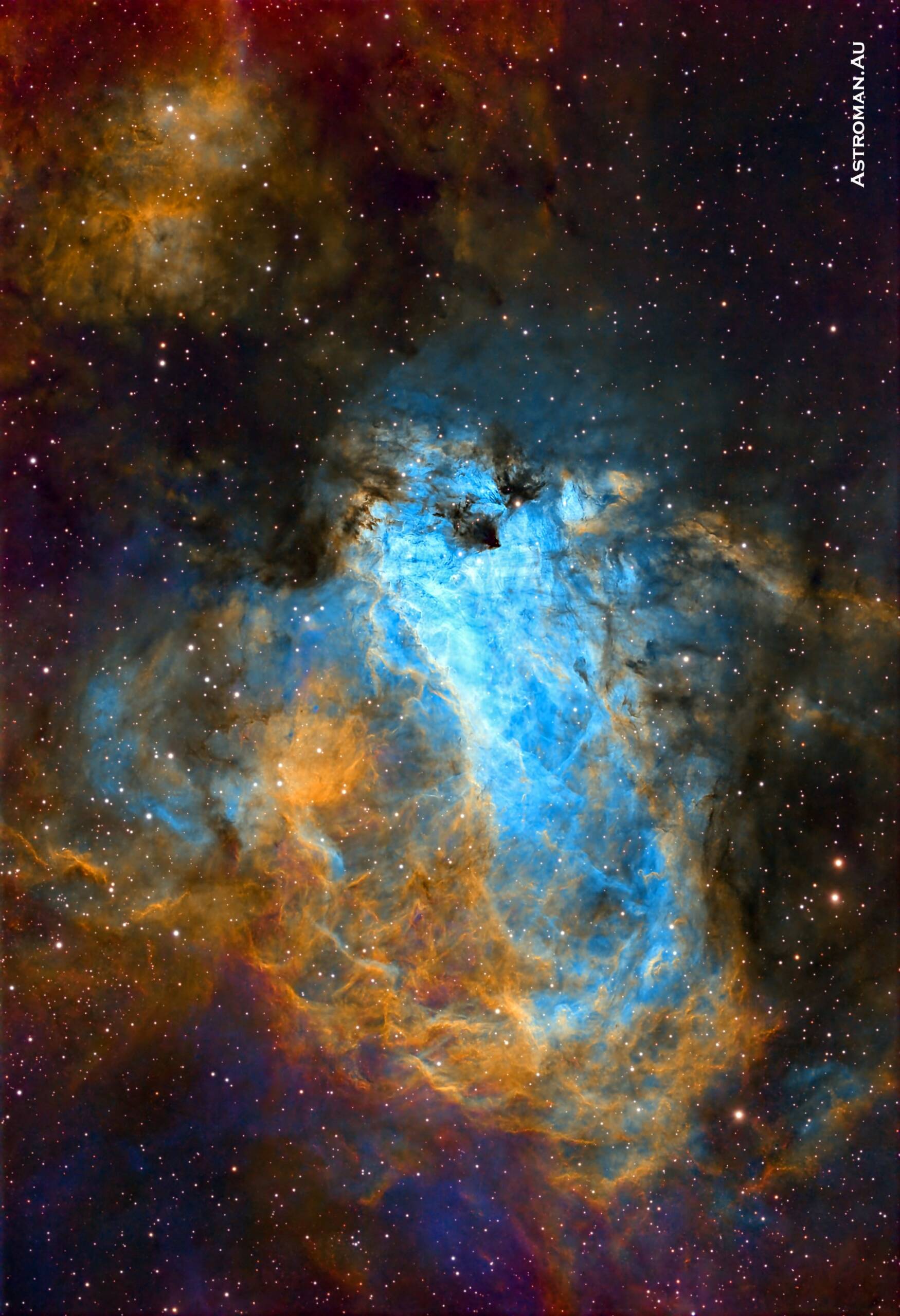
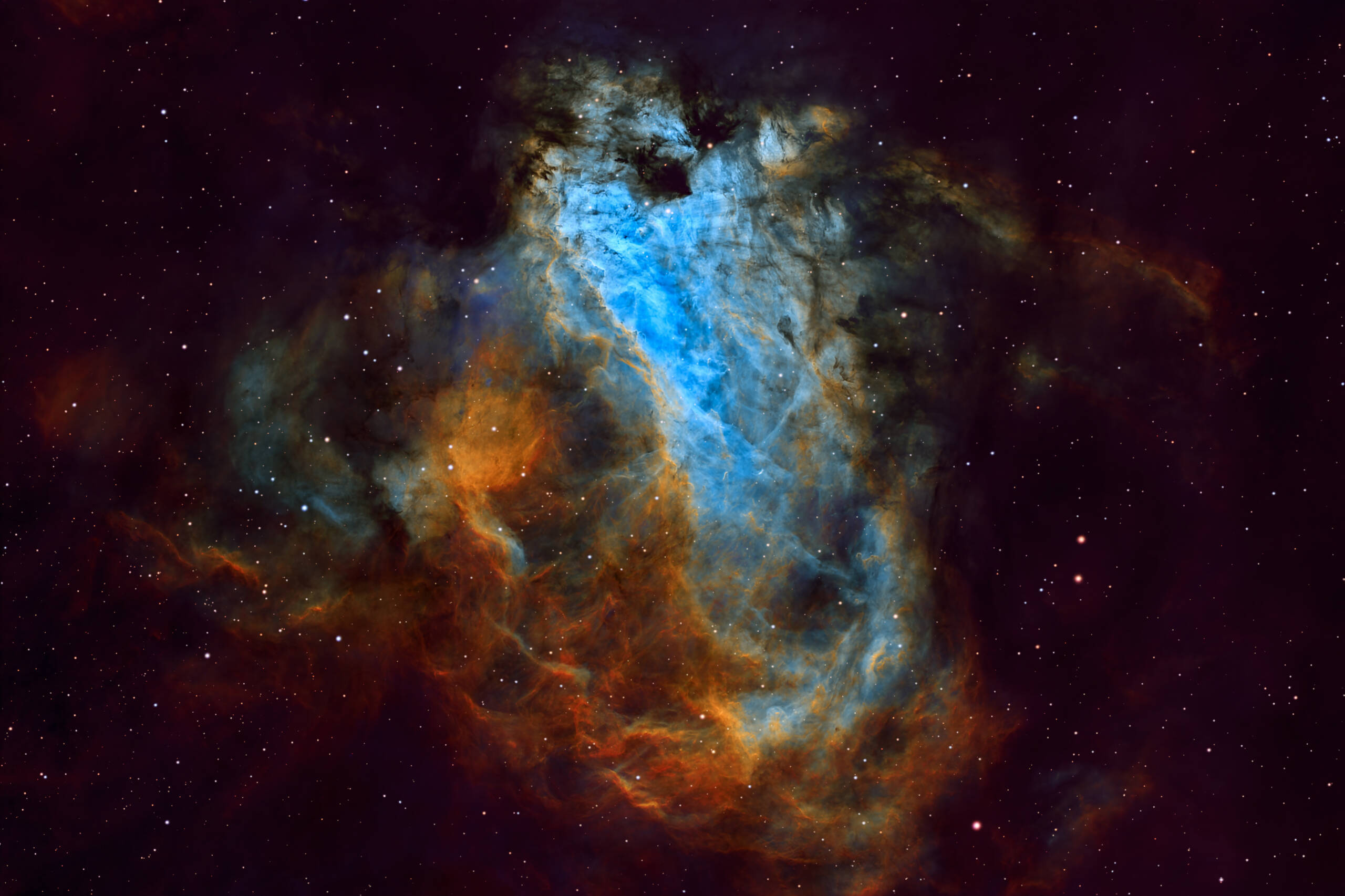
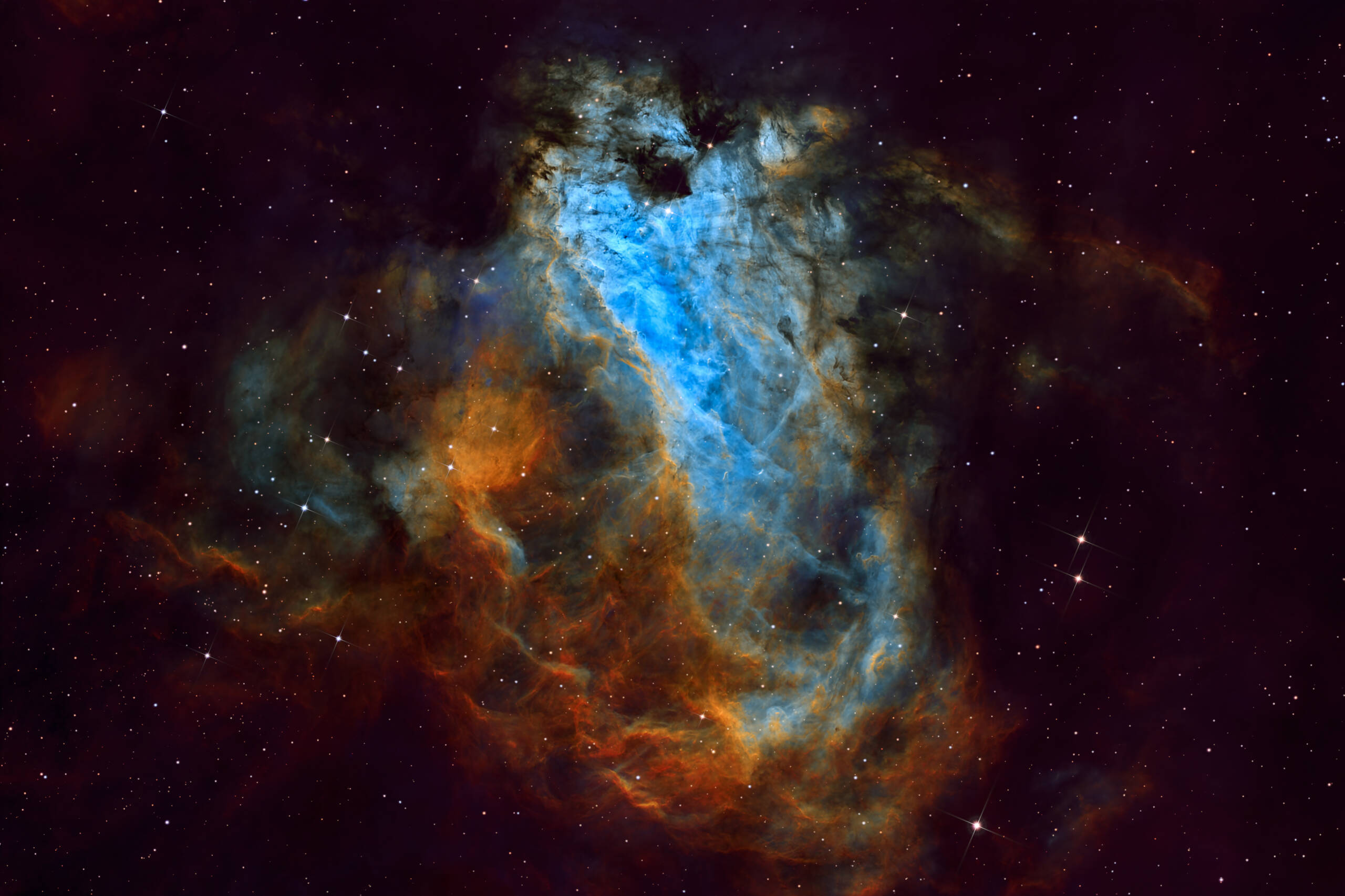
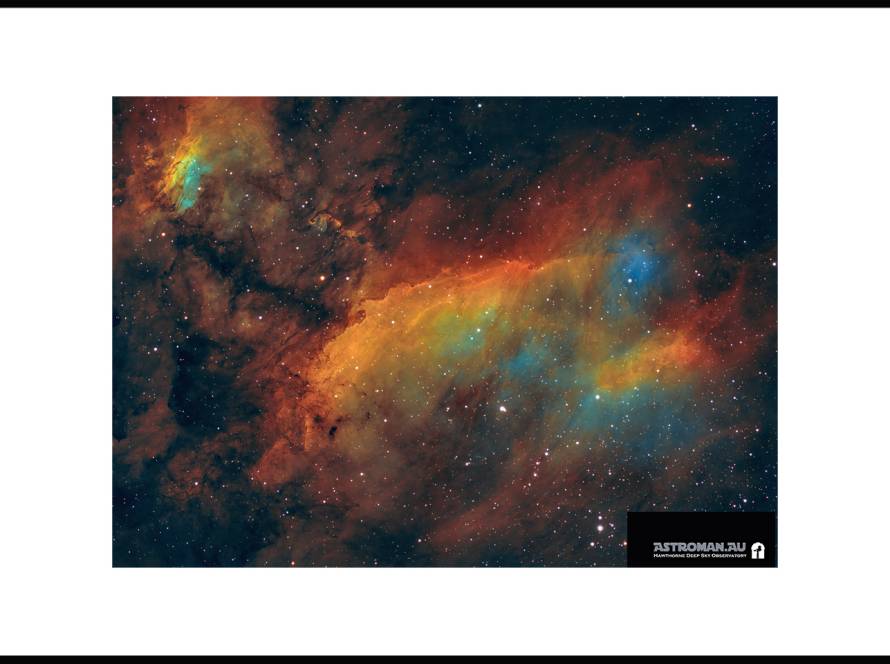
Glowing deep within the southern Milky Way is a vast stellar nursery known as the Omega Nebula, also called the Swan Nebula or Messier 17.
Located approximately 5,500 light-years away in Sagittarius, this extraordinary cloud of gas and dust is one of the most active star-forming regions in our galaxy.
At first glance, its luminous shape can resemble a graceful swan floating across a cosmic lake. Look deeper, however, and the image reveals something far more dramatic—a vast landscape of glowing hydrogen, dark dust and intensely energetic young stars.
The Swan is not simply beautiful. It is alive.
A Factory for Stars
The Omega Nebula is a stellar nursery where enormous clouds of gas and dust are collapsing under gravity to create new stars.
At its heart lies a young cluster of massive stars. Their intense ultraviolet radiation energises the surrounding hydrogen, causing the nebula to shine brilliantly. Powerful stellar winds then carve cavities and sculpt the surrounding clouds into ridges, pillars and intricate filaments.
Some of these young stars are extraordinarily massive compared with our Sun. Their short, energetic lives profoundly influence the environment in which they were born.
In the Omega Nebula, stars are simultaneously creating light and reshaping their birthplace.
Why the Colours Matter
The spectacular colours of the nebula are more than an artistic display.
Different gases emit light at different wavelengths. Hydrogen produces the characteristic red emission associated with many stellar nurseries, while oxygen and sulphur reveal additional layers of structure within the glowing clouds.
Narrowband astrophotography allows these faint emissions to be isolated and brought into view, revealing details that are largely invisible to the human eye.
The resulting palette becomes a kind of cosmic map, allowing us to explore the physical processes taking place inside the nebula.
A Swan Sculpted by Starlight
The familiar swan-like shape is created by an extraordinary combination of glowing gas and dark dust.
Dense clouds absorb and block the light behind them, while illuminated regions shine around them. The contrast between light and darkness creates the sweeping silhouette that inspired the nebula’s nickname.
But there is a fascinating twist.
The apparent swan is enormous—its graceful form is part of a stellar nursery spanning tens of light-years.
What looks like a small celestial bird is actually a landscape large enough to contain millions of Solar Systems.
A Journey Through Time
The Omega Nebula is roughly 5,500 light-years away.
The photons captured in this artwork therefore began their journey towards Earth thousands of years ago. They travelled across the Milky Way long before modern astronomy—and eventually reached a telescope here on Earth.
When we look at M17, we are seeing it as it existed in the distant past.
The telescope is not only looking across space. It is looking back through time.
From Photons to Photograph
Capturing the delicate structures of the Omega Nebula requires more than simply collecting an image.
Long-exposure astrophotography allows extremely faint photons from the nebula to accumulate over time. Multiple exposures can then be calibrated and integrated to reveal subtle structures hidden within the surrounding darkness.
Narrowband imaging provides another dimension, isolating the characteristic emissions of hydrogen, oxygen and sulfur and allowing the intricate architecture of the nebula to emerge.
The resulting data is carefully processed to balance the brilliant central regions with the much fainter surrounding clouds, preserving the sense of depth and scale within the scene.
The Astrophotographer’s Perspective
The Omega Nebula is a wonderful reminder that the universe rarely looks the way we imagine it.
From Earth, we see a beautiful swan.
Through the telescope, we discover a colossal cloud of gas and dust, illuminated by some of the most powerful young stars in our galaxy.
And behind the beauty is an even greater story: this is a place where stars are being born right now.
That combination of recognisable form, extraordinary scale and active stellar creation is what makes M17 such a compelling subject for astrophotography.
The Artwork
Omega Nebula — The Swan Among the Stars brings together the elegance of a recognisable celestial form with the immense physical drama hidden behind it.
Its luminous colours, intricate textures and dark sculptural structures make it particularly suited to large-format fine-art presentation.
Look from a distance and the Swan emerges.
Move closer and an entire stellar nursery unfolds.
A swan sculpted from gas and dust.
A nursery where massive stars are born.
A landscape of light, created 5,500 light-years away.
Related products
-
 Price range: $25.00 through $399.00 This product has multiple variants. The options may be chosen on the product page
 -
 Price range: $25.00 through $399.00 This product has multiple variants. The options may be chosen on the product page